
Discover and Compare Cheap Domestic and International Flights from Mexico

Top Cities to Travel in 2026
Book your dream flight easily with our leading aggregator service


Welcome to TICKET!
Find a comprehensive travel comparison platform at TICKET. Compare flights, prices, and options from multiple providers all in one convenient place for your perfect trip.
About TICKETFind Cheap Flights from Your Location
The most affordable flights from your location are automatically determined based on the most popular countries

Mexico City Juarez International
Oct 2026
Nonstop
One Way
Villahermosa
Oct 2026
From
$378
Felipe Angeles International
Oct 2026
Nonstop
One Way
Guadalajara
Oct 2026
From
$461Felipe Angeles International
Oct 2026
Nonstop
One Way
Monterrey Gen Mariano Escobedo
Oct 2026
From
$497Felipe Angeles International
Oct 2026
Nonstop
One Way
Oaxaca
Oct 2026
From
$553Felipe Angeles International
Oct 2026
Nonstop
One Way
Aguascalientes
Oct 2026
From
$567Felipe Angeles International
Oct 2026
Nonstop
One Way
Merida
Oct 2026
From
$604
Felipe Angeles International
Oct 2026
Nonstop
One Way
Veracruz
Oct 2026
From
$613Felipe Angeles International
Oct 2026
Nonstop
One Way
Puerto Vallarta
Oct 2026
From
$636Felipe Angeles International
Oct 2026
Nonstop
One Way
Tulum Felipe Carrillo
Oct 2026
From
$710Felipe Angeles International
Oct 2026
Nonstop
One Way
Puerto Escondido
Oct 2026
From
$712Explore Top Destinations: Best Flights by Continent
Travel information across continents and countries with the cheapest flight prices


Cheap Flights to Cities We Love
Our unbeatable flight deals make your dream getaways more accessible than ever


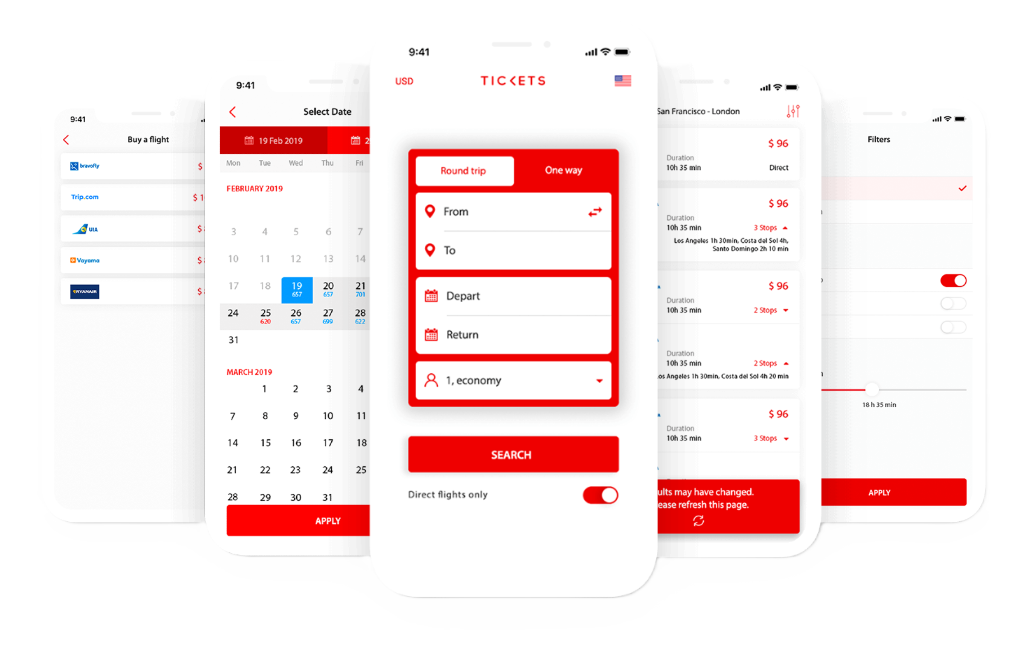
Our TICKETS app for iOS analyzes thousands of flight deals from hundreds of airlines and providers, delivering the best global travel options directly to your fingertips.
Cheap Flights from Mexico: When to Buy, Which Routes Pay Off, and How to Actually Save (No Fluff)
How far in advance should I book to get the cheapest flight from Mexico?
To land a cheap flight on short and medium routes within Mexico — think Mexico City to Cancun, Guadalajara, Monterrey, or Tijuana — book roughly one to two months out, with the sweet spot usually landing around six weeks before departure. Booking too early on these domestic routes tends to cost more, so the old "buy as far ahead as possible" advice is a myth here. Long-haul flights — say Europe or Asia from Mexico City — do call for more lead time, several months, and high-demand routes in peak season ask for even more. A single fare changes many times before takeoff, so chasing the perfect day is a losing game: set a price alert and let the TICKETS app ping you with a notification when the fare moves. The rule that always pays off: don't leave it until the final two weeks, when airfares climb fastest.
What's really the best time to buy a cheap plane ticket?
Grab a Mexico City ticket the day seats first go on sale and you land near the peak, not the floor — that opening day is one of the most expensive moments to buy. Fares start high in the very-early window, slide toward a low around six weeks before departure, then climb again as the plane fills up. Both extremes — buying super early or last minute — cost you, and the value sits in the middle. The exception is long-haul and peak season, where seats genuinely sell out, so booking several months ahead protects both your price and your availability. For a short off-season trip, like a long weekend at the beach, there's no rush; for a long or busy one, lock it in early. Instead of guessing where your route falls, let the buy-now-or-wait feature on TICKET.MX weigh around 12 months of price history and tell you whether to buy now or hold.
Which day of the week is cheapest to fly from Mexico, and is it worth it?
From Mexico, a midweek flight usually wins on price, so it's Sunday you'll want to skip: Tuesday and Wednesday tend to be the lowest days, while Sunday tends to be the most expensive day to depart. The best day shifts by route and season, so treat "midweek, not Sunday" as a rule rather than hunting for one magic day. On short, cheap flights like Mexico City to Guadalajara, the saving is small; on long-haul it matters more, where moving off the weekend can shave a solid chunk per person. One important distinction: this is about the day you fly, not the day you buy. The old "book on Tuesday" tip is dead, because fares now update constantly rather than once a week. To spot the cheapest stretches on the calendar, the month price view in the date picker points you to the low months; the midweek rule handles the day.
Why is a round trip pieced together separately sometimes cheaper than a single airline's fare?
Two tickets on two airlines can come in under one carrier's round trip: that's why a separately built round trip from Mexico City sometimes wins. On every round-trip search, TICKET.MX also prices the outbound and the return separately, then pairs the cheapest outbound leg with the cheapest return leg into one "combined" result. We only show it to you when it genuinely beats the best normal round trip, with the saving in pesos visible; if a standard round trip ties or wins, that's what you'll see. The catch is that a combined trip is two separate tickets and two confirmations, so you have to open both booking pages before paying for either. On TICKET.MX we flag the combined option so you know exactly what you're buying, and the math only makes sense when the difference is real.
Is it worth buying two one-way flights instead of a round trip?
Sometimes the cheaper way to fly is two one-way tickets rather than a round trip — and you don't have to hunt for it by hand, because every round-trip search on TICKET.MX already tests this option. When the cheapest outbound and the cheapest return fall on different airlines — common among the low-cost carriers flying out of Mexico City — two one-ways can add up to fewer Mexican pesos than any round-trip fare. On TICKET.MX we pair them into a single combined result, but we only show it when it beats the best standard round trip, with the saving visible. The trade-off is logistical: a combined trip is two separate tickets on two airlines. You confirm each leg on its own and re-check your bags at the connection, rather than checking them straight through to your destination. For a simple round trip with carry-on only, it's usually no hassle; with tight connections or checked bags, weigh the saving against the legwork.
If my dates can move, how much is that flexibility really worth for finding cheap flights?
What saves you most on a cheap flight isn't one clever trick; it's the room to move your dates, because flexibility lets you stack savings instead of leaning on one move. Shift to midweek instead of the weekend, then slide into a cheaper off-season month; the two combine into a real cut versus a peak-season weekend fare. Shoulder season is the strongest lever by itself: the quiet stretches between holiday peaks usually land well below high summer or the December holiday frenzy, so a Mexico City–Cancún or Mexico City–Monterrey hop tends to be cheaper then. Which months come out cheapest shifts by route, region, and hemisphere, but "dodge the obvious peaks" holds almost everywhere. Nailing the perfect day of the week, by contrast, saves little on a cheap route. That's why a full-month view beats checking date by date: on TICKET.MX, the date picker shows an indicative cheapest fare per month across several months, so the low-price months in pesos jump out at you.
Is it worth flying from a different airport to save money in Mexico?
Around Mexico City the usual cliché about cheaper secondary airports doesn't quite hold, even though a change of airport can still pull the fare down, occasionally by a wide margin. Here Volaris and Viva Aerobus — the low-cost carriers — fly from both the main Benito Juarez airport (MEX) and Felipe Angeles (NLU), north in Zumpango, plus Toluca (TLC) to the west. Departing from an alternate airport can drop the fare, but what really counts is the door-to-door cost: a cheaper flight from a far airport only wins once you add the transport, tolls, and extra time to get there, which from Zumpango or Toluca is no small thing. TICKET.MX detects the airport nearest you, and you can set your home airport by hand. There's no automatic radius search bundling nearby airports into one query, so to test an alternate you enter it as the origin and compare. The destination map is the fastest way to scan prices from your area to a range of destinations. Bottom line: compare the total trip cost, not just the headline fare.
A cheaper flight with a self-transfer — is it worth the risk of missing the connection?
From Mexico City, a self-transfer (virtual interline) fare is cheaper because it quietly reassigns one job to you: when the legs have to meet, that's on you, never the airline. Under the hood, that cheaper fare stitches two separate tickets — often on unrelated airlines — into one journey, and none of them has an agreement to protect that connection. The real risk is the connection. If your first leg is delayed and you miss the second, that airline owes you nothing; you're a no-show and may have to buy another ticket. You also collect and re-check your own bags between legs, and any compensation is assessed per ticket. So price the worst case, not the headline fare: leave a generous layover — a few hours with carry-on, more with checked bags or an airport change — and consider missed-connection insurance. TICKET.MX shows these options with their warning, and the route map marks every airport change so you decide with your eyes wide open.
Price alerts for cheap flights — worth it, or just noise?
An alert's gift isn't predicting a Mexico City–Cancun fare; it's reacting the second the price falls. A fare moves many times before departure, so a price alert through the TICKETS app watches a route — say Mexico City to Cancun, or a flight to the United States — and sends you a notification the moment the price genuinely drops, turning timing into a rule instead of a guessing game. You set it, then buy in the cheap window or on a real dip. Alerts pay off most when your dates are flexible, when you book well ahead, or when you follow long-haul routes that swing harder. The blind spot: a flash fare can vanish before any alert fires. If you want the trend rather than a single ping, the buy-now-or-wait read grades around a year of history as buy, wait, or neutral. Alerts are free in the TICKETS app.
Should I book now or wait for a cheaper flight from Mexico?
Book now or wait? Don't guess from a single search — let the buy-now-or-wait read on TICKET.MX grade the trend for you. A fare moves many times before takeoff, so one screen tells you almost nothing about whether you're looking at a good price or a bad one. The feature weighs around 12 months of price history for your route and labels it as buy, wait, or neutral: a clear nudge to lock it in now or hold a little longer, instead of refreshing the page and hoping. Treat it as a read on the trend, not a guarantee — no tool can promise tomorrow's fare, and a flash deal can still appear or vanish without warning. It pays off most on the trips where timing actually swings the price: long-haul routes and high-demand dates that move hard, where buying at the wrong moment costs real pesos. For a cheap off-season hop it matters less; for a pricey or peak trip, check the read before you commit. And when it says wait, pair it with a price alert in the TICKETS app so you get a notification the moment the fare genuinely drops, rather than watching the page yourself.
If TICKET.MX is free, how does it make money and why should I trust its prices?
Where does the money come from if we don't charge you anything? From a referral commission paid by the provider: when you find a flight and we send you to book with the airline or agency, that company pays us a commission for the referral, and it adds nothing to your fare. We don't mark up the price — what you see here in pesos is the same you'd pay booking direct, because the commission comes from the provider's side, not your pocket. That's why searching for cheap flights from Mexico with us is free and you don't need an account to compare prices. And because we earn nothing extra for showing a higher fare, nothing pushes us to hide the cheap option from you: we show you the lowest result we find, including a two-ticket combined trip when it beats the round trip. When you tap "book," you complete your purchase on the airline's or agency's site, so the charge, baggage, and changes are handled with them directly; we're the search engine that takes you to the best fare, not the one selling you the ticket.
What's the cheapest time of year to buy flights from Mexico?
Aim for shoulder seasons, those quiet gaps between one holiday peak and the next: to fly cheap from Mexico, picking the right month beats any day-of-the-week trick hands down. In Mexico, prices tend to ease in late January and February (once the posadas and holidays are over), and again in September and October, once the summer bustle clears out. The pricey windows are high summer (roughly June to August, school holidays and all, with Semana Santa just before), the December holidays, and long holiday weekends. It shifts by route, region, and hemisphere — a Southern Hemisphere summer or a local holiday can flip it — but "dodge the obvious holiday and summer peaks" holds almost everywhere. On TICKET.MX you can see price data for destinations, with the cheapest and most expensive months across 12 months, to easily spot the cheapest stretches; then you search flights on the results page to see the fares available right now in pesos.